I could only read one chapter a day. That’s not hyperbole or literary flourish. It’s what Dark Emu demanded of me. Each chapter so thoroughly upended what I thought I knew about this continent that I needed time to sit with the disorientation before continuing.
As Australia Day arrives again, it seems worth sharing why.
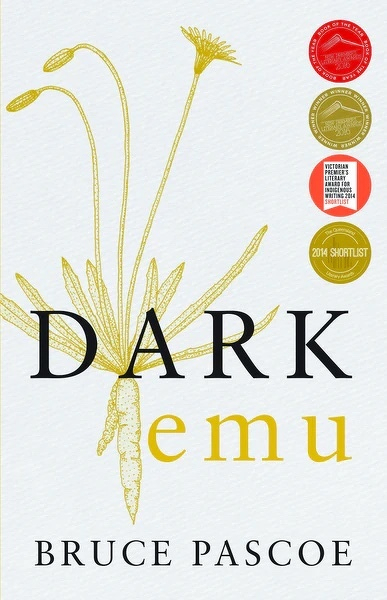
Bruce Pascoe’s book makes a straightforward argument: the “hunter-gatherer” label we’ve attached to pre-colonial Aboriginal Australians is wrong. Not merely incomplete. Wrong. And the evidence for this isn’t hidden in obscure archives. It’s sitting in the diaries and journals of the early explorers themselves, the very sources we cite when teaching Australian history.
Those explorers documented extensive grain harvesting. They recorded permanent housing. They described sophisticated fish traps, land management through controlled burning and food storage systems. The accounts are detailed, often admiring. And then, within a generation, sheep and cattle had swept it all away. And so had our collective memory.
What replaced it was a story more convenient for colonisation: that the land was essentially empty, its people wandering without agriculture or settlement, their claim to the country somehow less than the claim of those who arrived with livestock and title deeds. The myth didn’t emerge by accident. It served a purpose.
Pascoe traces this erasure methodically, footnote by footnote. This is not advocacy dressed as history. It’s primary source research that happens to be devastating. The book has weathered attacks from predictable quarters on the political right, and emerged with its scholarship intact.
I won’t pretend reading it was comfortable. Everything I absorbed as a child about Australia’s founding, the implicit assumption that 1788 marked the beginning of anything worth calling civilisation here, came apart under the weight of those explorer journals. It was genuinely mind-bending.
If you haven’t read Dark Emu, do yourself a favour. It won’t change what happened. But it might change how you understand what was lost. And what was deliberately obscured. That seems a fitting thing to sit with, as another Australia Day passes.
==
“Dark Emu” by Bruce Pascoe - www.magabala.com/products/…
WINNER – 2016 Indigenous Writer’s Prize in the NSW Premier’s Literary Awards
WINNER – 2016 Book of the Year in the NSW Premier’s Literary Awards
SHORTLISTED – 2014 History Book Award in the Queensland Literary Awards
SHORTLISTED – 2014 Victorian Premier’s Award for Indigenous Writing
==
I support moving the date of Australia Day to the last Monday in January.
The date would float about and every now and then fall on 26th January. We already enjoy movable dates for Easter, Labour Day Kings Birthday and Friday before Grand Final holiday in Melbourne.
In other parts of the world they sensibly move dates to fit in with a Monday cycle - Thanksgiving in Canada, British Bank Holidays and Japan (Happy Monday system).
Rationally, changing the date should offend no one. It will however alleviate pain from many who see it as a day of mourning.
It is not a long standing tradition. Australia Day only officially became a public holiday for all states and territories only 32 years ago, in 1994.
Changing it is a power struggle. The arch conservatives will fight to maintain a specific aspect of this day that the rest of the nation ignores.
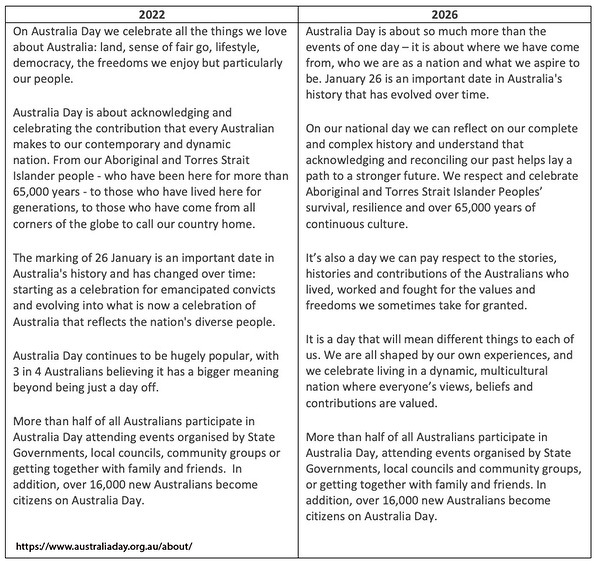
Our Federal Government is different in 2026 than in 2022 but as you can see there is strong agreement on the evolving nature of Australia Day as a nation slowly grows up and reconciles with its history.