As 2026 Formula 1 testing begins, it’s worth pausing to appreciate just how far the technology has come. Modern Formula 1 engines scream to maximum RPM with components that, remarkably, are built layer by layer from metal dust and lasers. Honda’s championship-winning pistons aren’t forged in the traditional sense. They’re printed.
The Problem Honda Faced
During the development of their RA620H power unit for the 2020 season, Honda’s engineers hit a wall. Traditional aluminium forged pistons were struggling under the immense combustion pressures and temperatures demanded by modern F1 engines chasing maximum efficiency. The obvious solution was to use stronger materials like steel, but steel’s weight penalty would destroy performance. They needed something stronger than aluminium but lighter than steel forgings. Impossible by conventional means.
The 3D Printing Solution
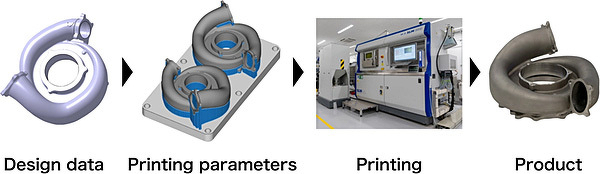
Honda turned to Laser Powder Bed Fusion, an additive manufacturing process that builds components from steel alloy powder, one microscopic layer at a time. This wasn’t just a different manufacturing method. It was a complete rethink of what a piston could be.
Honda develops this technology in-house, conducting rigorous testing of laser parameters, scanning speeds and gas circulation patterns. For those interested in the engineering complexity behind the breakthrough, Honda’s detailed technical article reveals how they use simulation-based deformation prediction to accelerate development and explains the real challenges of production additive manufacturing beyond the marketing hype.
Despite steel being inherently heavier than aluminium, Honda’s 3D printed steel pistons were actually lighter than their previous aluminium versions. How? Topology optimisation allowed computers to calculate exactly where material was needed and where it wasn’t, removing every unnecessary gram.
More impressive still were the internal structures. The printing process enabled engineers to create honeycomb lattices and cooling galleries (internal oil channels) that would be physically impossible to manufacture through casting or forging. These weren’t just aesthetic flourishes. They were functional designs that improved cooling and structural integrity whilst reducing mass.
The speed advantage was substantial too. Prototyping new piston designs no longer required expensive tooling or moulds. Honda could iterate rapidly, testing new geometries and bringing improvements to the track in weeks rather than months.
The Technology Behind It
Porsche do something similar. This video explains their Laser Metal Fusion process. It works by spreading an incredibly thin layer of metal powder across a build platform, then using high-powered lasers to selectively melt the powder in precise patterns. Layer after layer, the piston takes shape. The unused powder supports overhanging structures during the build, then gets recycled for the next print.
What emerges looks almost organic. The bionic architecture of these pistons, with their flowing curves and internal voids, resembles something grown rather than made. That’s because the designs are optimised by algorithms that mimic natural structures, placing material only where stress analysis dictates it’s needed.
A Broader Revolution
Honda’s 3D printed components helped power Red Bull Racing to championship success. They represent a fundamental shift in how F1 teams approach component design and manufacturing. When the constraints of traditional manufacturing disappear, engineers can optimise for performance in ways previously unimaginable.
The future arrived quietly, one layer at a time.
Just when we thought there was no more to squeeze out of internal combustion engines, we find this level of innovation.
Mind you, F1 teams have enormous budgets. I don’t think family cars will get 3D printed pistons. Realistically most of us should drive EVs, but there’s still something primeval and thrilling about experiencing a screaming high performance engine.
Further Reading & Viewing:
- Honda’s R&D Facilities: Metal Additive Manufacturing – Honda’s technical article detailing their in-house development process, simulation technology and real-world applications across F1 and accessibility equipment
- Honda’s 3D Metal Printing in Action – Honda’s own video showcases of the laser powder bed fusion process (02:55)