In January, pre-restarting this blog, I sent a note to a friend listing 23 Chinese EV brands either confirmed, launching or strongly indicated for the Australian market by 2026. Twenty-three. In a country that sells 1.2 million new cars a year.
I wrote: “Are they all going to have service and parts for the next 7 years? What about beyond that?”
Today we got the first answer. No.
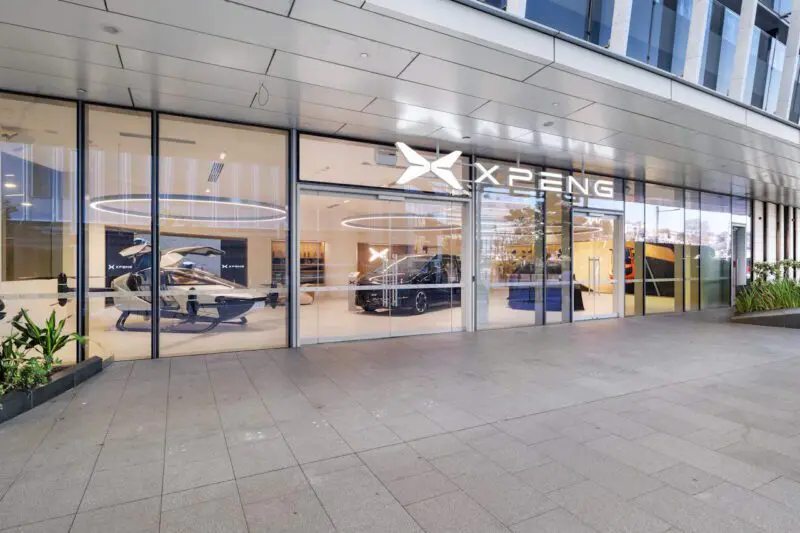
TrueEV Distribution, the Sydney-based company holding exclusive Australian distribution rights for Xpeng, has been placed into external administration. Administrators Daniel Juratowitch and Barry Wight of Cor Cordis have taken control of 197 unsold vehicles across Melbourne, Brisbane, Wollongong and Fremantle. Behind the administration sits a Federal Court dispute between TrueEV and Xpeng itself. No resolution before the next hearing at month’s end.
Roughly 2,000 Xpeng owners in Australia now face genuine uncertainty about warranty, servicing and parts.
One owner’s collision-damaged Xpeng was towed between repairers, eventually landing at a Collingwood facility where they were told to expect a six-month wait for parts. Budget Direct subsequently advised they would not renew insurance on the vehicle once the current policy expired. An insurer refusing to cover a car less than two years old. That is the real-world consequence of buying from a brand without deep roots in this market.
The numbers are brutal
Here is the context that makes this inevitable rather than surprising.
In 2025, 77 per cent of all battery electric vehicles sold in Australia were made in China. Twenty-two Chinese brands collectively held 41 per cent of the EV market, selling more than 30 models between them. And more are coming. Nio plans to launch the Firefly small EV here. Xiaomi is circling.
But the market they are all fighting over is small. EVs account for around 13 per cent of new car sales, roughly 150,000 vehicles annually. Divide that across the established players (Toyota, Hyundai, Kia, Tesla) plus 23 new Chinese entrants and the maths gets ugly fast. BDO’s analysis of the sector laid bare the fragility of the newer entrants: Zeekr has 13 dealerships nationally, Geely 7, Leapmotor 4, Deepal just 2. Thin networks selling thin volumes. Several of the smaller brands are burning cash on every showroom they operate.
The distributor as the weak link
The model for most of these brands entering Australia is the same. A local company takes on exclusive import and distribution rights. It opens showrooms, trains technicians, imports stock and builds a customer base. The manufacturer provides the product and the branding. The local operator carries the commercial risk.
It is a model with a structural fault baked in. The distributor is undercapitalised relative to the obligation. The manufacturer is distant. And the Australian market is small enough that a few bad quarters can be fatal.
BYD recognised this vulnerability early and took direct control of its Australian distribution. Xpeng was reportedly contemplating the same transition before the legal dispute with TrueEV erupted. That tells you everything about where the smart money thinks the risk lies.
The 2-year problem
There is a compounding factor that rarely gets discussed amid the breathless coverage of each new Chinese EV launch.
In China’s fiercely competitive domestic market, the typical on-sale lifespan of a model before replacement or substantial revision is around two years. Chinese manufacturers approved 83 new passenger car models across just three brands (BYD, Wuling, Geely) in the twelve months to October 2025. Volkswagen managed 6 in the same period. Nissan managed 2.
What looks like rapid innovation from the outside creates a genuine problem for anyone trying to maintain a parts and service business in a small export market.
If a model is discontinued or substantially revised in China, the parts pipeline for Australian vehicles becomes unreliable. A distributor cannot hold enough local stock to buffer a six-month wait for a rear quarter panel on a car that sold 2,000 units. And when the distributor itself is in administration, that buffer drops to zero.
This is not a criticism of Chinese engineering. It is a structural consequence of grafting a high-velocity product cycle onto a low-volume market through a thinly capitalised intermediary.
We have seen this before
In the 1970s, Toyota, Datsun and Mazda flooded Australia. The cars were dismissed as “jap crap.” They endured. Ford Falcons and Holden Kingswoods had to reinvent themselves for a few decades before ultimately disappearing entirely.
But there is a critical difference. The Japanese cars of that era won by being mechanically simpler and more reliable. Today’s EV disruption is characterised by increasing electronic and software complexity. That inversion matters.
Modern vehicles log faults, but fault trees are often indicative not exact. A logged symptom may point to five possible modules, any one of which requires full replacement rather than component-level repair. A failure in a door lighting module can cascade to knock out the air conditioning. These are not problems a local mechanic can solve with a workshop manual. They require factory-level diagnostics, factory-supplied parts and factory-trained technicians.
Even BYD, the strongest Chinese brand in Australia, has faced repair times of up to six months stemming from overseas parts sourcing and limited service infrastructure. That is BYD, a company with genuine scale and direct factory involvement. Imagine the situation for brands with a fraction of its volume and no factory presence at all.
Who survives?
The consolidation is coming. The only real question is how many owners get caught in the middle.
Every one of these vehicles is, in its own right, technically credible. The era of dismissing Chinese manufacturing quality is over. A 2024 J.D. Power report found brands like Chery, Geely and GAC scoring near global averages for dependability. That is genuinely impressive progress. But quality is not the problem. The problem is what happens when the business model fails.
BYD is the frontrunner. It leapfrogged Mitsubishi in August 2025 to become Australia’s sixth biggest car brand and has taken direct factory control of distribution. That direct involvement is the single most important structural advantage a Chinese brand can have here.
Tesla (assembled in Shanghai, whatever the branding suggests) remains dominant. The Model Y was Australia’s best-selling EV in 2025 with 22,239 units. Tesla’s vertically integrated service network is a genuine competitive moat in this environment.
MG has something most new entrants lack: time. It has been here long enough to build a real dealer network. That infrastructure matters more than the spec sheet of any individual model.
The Hyundai-Kia axis from Korea is a different proposition entirely. Deep roots in Australia, genuine local investment, fast-growing EV ranges (the Kia EV5 is selling well) and the backing of one of the world’s largest automotive groups.
Polestar has the Geely-Volvo engineering base and some access to Volvo’s service network.
After that? It gets genuinely murky. GWM (Haval) has been around long enough to be taken seriously. Chery has returned after its failed 2011-2015 attempt and shows stronger numbers this time. But of the 23 brands I listed in January, I would be surprised if more than six or seven are still operating in Australia by 2030.
The question buyers should ask
The right question before purchasing any EV from a brand with limited Australian history is not “how good is the car?”
The question is: “What happens to my warranty and my parts supply if this distributor exits the market?”
Xpeng’s TrueEV is the first domino. It will not be the last. Nearly 60 brands are currently battling in Australia’s new car market and about a quarter of them are from China. That ratio keeps rising until the economics force a reckoning.
For those willing to take the risk on a newer brand, there is a smarter model emerging. Lease or subscribe rather than buy outright. Cap the downside. Renew under warranty cycles. Shift the technological obsolescence and failure risk back to the manufacturer or financier. It costs more per month, but when the alternative is owning a sophisticated machine that nobody can fix, the premium buys peace of mind.
The market will consolidate. It always does. The survivors will be the brands with genuine scale, direct factory involvement and established local infrastructure.
A great warranty is worthless if the company honouring it no longer exists.
Sources:
- Xpeng’s exclusive Australian distributor True EV placed into external administration (thedriven.io)
- Chinese brands claim a quarter of Aussie auto market, but accounting firm says boom won’t last (carexpert.com.au)
- BYD’s plan to fix its biggest problem (carsguide.com.au)
- China’s BYD, Geely launch new EV models faster than rivals can design them (restofworld.org)
- Australia’s EV Sales 2025: Complete Year in Review (zecar.com)
- 13 Chinese EV Brands Coming to Australia (retainmedia.com.au)
- What Happens When Cheap Chinese EVs Hit Canada? Look At Australia (insideevs.com)
- Chinese car brands in Australia: growth, quality, and market impact (mmcarz.com.au)