The short answer is Melbourne.
If you want to see the biggest version of Christopher Nolan’s The Odyssey in Australia, book the IMAX 70mm film presentation at IMAX Melbourne, inside Melbourne Museum in Carlton.
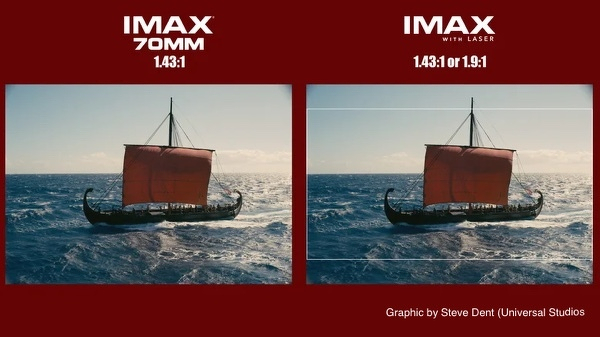
It is the only Australian cinema showing the film from a 15/70 IMAX print and the only Australian venue on IMAX’s official list of 70mm screenings. Every frame fills the tall 1.43:1 screen, giving you about 40 per cent more picture than the widescreen presentation.
Melbourne also wins if you prefer laser projection. Its GT Laser system can fill the same 1.43:1 screen, and that screen is larger overall than Sydney’s. Sydney is the clear second choice: its dual-projector GT Laser system can also fill a 1.43:1 screen, but the venue has no 15/70 film projector. Canberra, Pacific Fair and the other Australian laser IMAX venues use wider 1.90:1 screens.
The Australian shortlist
| City | Cinema | Presentation of The Odyssey | Verdict |
|---|---|---|---|
| Melbourne | IMAX Melbourne, Carlton | 15/70 IMAX film or GT Laser, 1.43:1 | Best in Australia for film and laser |
| Sydney | IMAX Sydney, Darling Harbour | Dual-projector GT Laser, up to 1.43:1; no 15/70 film | Second-best in Australia; best in Sydney |
| Canberra | Dendy Canberra IMAX | Laser XT, 1.90:1 | Best in Canberra |
| Gold Coast | Event Cinemas Pacific Fair | IMAX with Laser, 1.90:1 | Best on the Gold Coast |
That makes the practical ranking simple:
- IMAX Melbourne
- IMAX Sydney
- Canberra or Pacific Fair, depending on where you live and whether sessions are available
Sydney deserves more than a consolation prize. Its 29-metre-wide by 24-metre-high screen is one metre taller than Melbourne’s, and its dual-projector GT Laser system can project the full 1.43:1 image. Event describes it as one of the largest cinema screens in the world.
Height is only one dimension, however. Melbourne’s screen is considerably wider at 32 metres by 23 metres, giving it about 736 square metres of surface area compared with Sydney’s roughly 696 square metres. Melbourne can use that larger screen for both 15/70 film and GT Laser. It is therefore Australia’s best IMAX venue in either format. Sydney remains the best alternative for viewers who cannot get to Melbourne.
Why 1.43:1 matters
The format names make this more confusing than it should be. An excellent Engadget explainer on IMAX and IMAX 70mm sorts the options into a useful order.
At the top is a film shot with IMAX 70mm cameras and projected from a 15/70 IMAX print onto a 1.43:1 screen. That is the Melbourne presentation. The film travels horizontally through the projector, with 15 perforations for each enormous frame. It combines the tallest picture with the extraordinary detail and physical texture of film.
Next comes digital IMAX with Laser. The best laser installations can be brighter and offer stronger contrast than film, but digital projection is limited to 4K. The GT Laser installations in Melbourne and Sydney can display the same tall 1.43:1 frame, with Melbourne again using the larger screen. Most other Australian laser IMAX presentations use the wider 1.90:1 image.
The difference is mainly vertical:
- 1.43:1 IMAX, on film or GT Laser in Melbourne and GT Laser in Sydney, shows the full, tall frame.
- 1.90:1 IMAX retains much of the IMAX image but crops the top and bottom.
- A regular wide cinema presentation shows less again.
This matters more than usual because Nolan shot the entire film with IMAX film cameras. The expanded frame is not reserved for a handful of action scenes. In Melbourne, it remains open for the full 172 minutes.
Melbourne’s absurdly physical advantage
IMAX Melbourne’s screen measures 32 metres wide by 23 metres high. The Odyssey print weighs about 235 kilograms and runs for roughly 17.5 kilometres.
Those figures sound like publicity until you consider what they mean in the projection booth. Nearly a quarter of a tonne of film must pass cleanly through a mechanical projector over almost three hours, throwing each frame onto a screen as high as a seven-storey building.
That is why the words on the ticket matter. Look specifically for “IMAX 70mm film presentation”. An IMAX logo by itself does not promise the same format, and a standard 70mm session is also different from horizontal 15/70 IMAX.
If Melbourne is impractical, Sydney’s GT Laser presentation is the next best choice. Canberra and Pacific Fair still provide a genuine premium presentation at 1.90:1. But whether the priority is 15/70 film, GT Laser or simply Australia’s largest IMAX screen, there is only one first choice. Melbourne.
Sources
- IMAX versus IMAX 70mm: the difference between the formats — Engadget
- The Odyssey in IMAX 70mm — IMAX, including the official worldwide theatre list
- The Odyssey — IMAX 70mm film presentation — IMAX Melbourne
- The IMAX difference — IMAX Melbourne, including screen dimensions
- Projecting the 70mm IMAX print for The Odyssey — PetaPixel, including the print’s length and weight
- IMAX Sydney — screen dimensions and dual-projector GT Laser system
- IMAX Sydney opening announcement — EVT and Destination NSW, including screen area and shape
- Dendy Canberra IMAX — Dendy Cinemas
- Pacific Fair — Event Cinemas