A UK driving instructor’s leased Nissan sat off the road for three months this year, waiting on a single spare part. By the time it was finally repaired, she had spent more than £2,500 hiring a replacement dual control car, borrowed money from relatives to keep teaching and nearly lost her livelihood over a repair that should have taken days. The Guardian reported the case last week as a straightforward consumer complaint. It reads more like a warning.
The UK setting doesn’t matter. The same parts delays and the same insurance gaps are turning up in Australian driveways too, and mechanics here are already stretched thin before a missing part even enters the picture. If you own a modern car, two things in your policy now matter more than they did five years ago.
Windscreens aren’t simple anymore
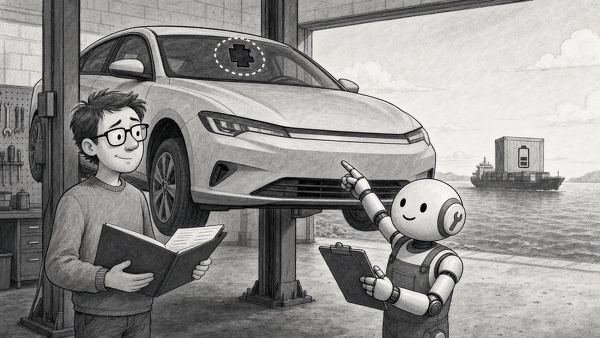
Start with the windscreen. Most cars built in the last five years carry a forward-facing camera behind the glass, sometimes a radar unit too, feeding lane-keep assist, adaptive cruise control and automatic emergency braking.
Crack that windscreen and the repair is no longer a glazier turning up with a suction cup. The new glass goes in, then the camera has to be recalibrated and road tested before the safety systems trust what they’re seeing again. Skip that step and the car can think a lane exists where it doesn’t.
Check your policy covers windscreen replacement specifically, including the recalibration. Plenty of policies still price glass as a stand-alone claim from the pre-ADAS era, and the gap between “new glass fitted” and “safety system actually working” is exactly where an unexpected bill lands.
Insure the wait, not just the crash
Then there’s the wait itself. Car manufacturers run just-in-time inventory, which works brilliantly until the part you need isn’t in the country. Need a specific harness, sensor or trim piece that only ships from overseas? You’ve joined a queue with no fixed length, as that Nissan owner found out.
EVs make it worse. Battery packs can’t be shipped by air under current freight rules, so a replacement not already sitting in an Australian warehouse comes by sea. That’s weeks, not days.
Chinese EV brands add a further wrinkle. New models now arrive roughly every two years, often with bespoke interiors and ever larger digital screens that don’t carry over to the next generation. I’ve flagged this self-obsolescence problem before: fast model cycles suit buyers chasing the newest screen, and work against anyone needing a part for a car that’s already been superseded twice. It’s a similar red-tape trap to the warranty conditions catching new buyers off guard, just further down the ownership timeline.
This is why the replacement vehicle box on your insurance policy is worth ticking, even at the extra cost. Once you’re covered, the delay becomes the insurer’s problem rather than yours. Insurers carry far more weight with a distributor or dealer network than any individual owner ever will, and a hire car sitting on their account gives them a real reason to push for a fix or in some cases writing off you car so you can buy a new one!
The Guardian’s driving instructor got her money back eventually, after a consumer champion column did the chasing for her. Most of us don’t have a journalist on speed dial. Tick the boxes now, before the part you need is the one still sitting on a container ship.
Sources: