
Update 13 June: Access to Fable 5 blocked for non-US citizens by order of US Government. See Anthropic announcement https://www.anthropic.com/news/fable-mythos-access
Anthropic’s Fable 5 is out, and I’m experiencing a mild anxiety I didn’t expect: I don’t have a killer app idea to throw at it.
It’s a civilian version of their previously announced Project Glass Wing - reserved for select organisations because of its potential for misuse in cyberwarfare and mass-scale hacking. Mythos ships with guardrails that prevent the most dangerous applications. One of those, naturally, is using it to train competing models.
They’ve made it free to subscribers through 22 June and reset quotas to give people more room to play. After that, anyone wanting to use Fable will need to pay for it based on API-like billing. Basically pay as you use, as opposed to drawing on your Anthropic subscription.
Others have demonstrated it building impressive things. But the first build is often a shallow facsimile of a robust, enduring software product. Looks good but may lack depth and robustness. There’s a gap between “look what it made” and “this is something people can rely on.”
I’ve thrown a few tasks at Fable. It handles them cleanly, without fuss - just like Anthropic’s other models in my experience. It costs a lot more tokens - double what Opus uses - and I’m not seeing meaningfully better results. Possibly I haven’t thrown it sufficiently tricky tasks to let it shine.
One of my regular frustrations is PDF forms without text fields. That means firing up Preview on my Mac, using the annotation tool to manually create and duplicate text fields. It’s tedious. Why doesn’t the form creator just make it fillable in the first place?
Anyway. I threw this problem at Fable - could it take a standard PDF with boxes and lines indicating where content goes and turn those into actual data-entry fields? It needed about 15 minutes to think through a plan, then another 15 to build the thing. A web front end, upload a PDF, press process, and fractions of a second later a smarter form ready to download and fill in. First version had a couple of glitches. I fed those back, Mythos fixed them quickly. It works.
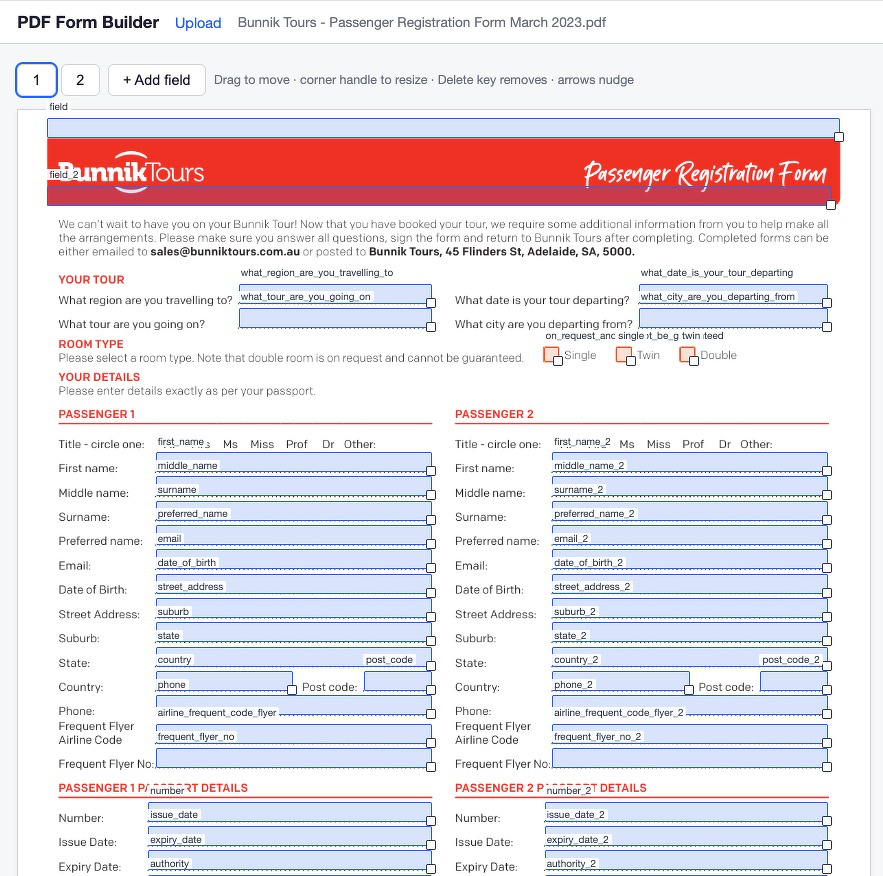
(Here the app autodetects the fields and creates PDF fields for you to type into)
As a piece of personal software I’ll use a handful of times a year, it does the job. It could be published and made available online - it wouldn’t need many resources to run.
But the moment I do that, I’m taking on the responsibilities of maintaining a system people would become dependent on. Battling weird corner cases. Fielding expectations about fixes. No thanks. I’m happy to dabble, but not to carry the weight of publishing software.
**Note: ** If you are technically minded I’ve put the code up on Github. I’ve run it across a wide selection of forms. Works for me. Your mileage may vary. It’s yours to do as you wish under the licence.
Any of the Claude models could conceivably have done the job - perhaps less elegantly, maybe slower. I haven’t bothered to test. Had I been paying current token rates for Mythos, that exercise would have cost US$51.
I haven’t pushed it much further, so I’ll point you toward Professor Ethan Mollick, who has done the work I haven’t. His verdict is more considered than mine. My $51 says he’s right to take it seriously.
Edit: An earlier version this article used Mythos, not Fable, when referring to the widely available public model. Thos is the version that’s locked up for all but a few select organisations.