The best model got banned, so I tested Fusion
Three days after Anthropic shipped its best ever model, the US government switched it off for everyone outside America. So I went looking for the next best thing, and OpenRouter reckons it has one.
TL;DR - The most powerful AI models from Anthropic (Claude) and OpenAI (GPT-5.5) are no longer clearly ahead. An open-weight challenger, Z.AI’s GLM 5.2, now matches the priciest flagships, beats Anthropic’s mainstream workhorse outright, and costs a fraction as much. At the same time the closed labs are quietly ending the all-you-can-eat deal on their heaviest models and moving to pay-per-use as they chase profit. If you pay for the top tier out of habit, now is the moment to check whether you still need to.
A quick orientation for anyone who does not live in this stuff. “Frontier” models are the biggest, most capable AI systems, the ones the headlines are about. Anthropic’s Claude Opus. OpenAI’s GPT-5.5. They are closed: you rent access, you cannot see inside them, and you cannot run them yourself.
“Open-weight” models are the opposite. The company releases the actual model so anyone can download it, run it on their own hardware or host it cheaply through a dozen competing providers. Z.AI’s GLM 5.2 is one of these.
I read Austin Henley’s post Automating my job away on a Friday night and did the laziest possible thing with it.
Henley’s whole piece builds to one prompt. A friend who runs a startup tells his team don’t do anything three times - if a task comes round more than twice, automate it. Henley took that to its logical end and pointed his coding agent at its own history.
So I copied his idea, swapped “Copilot” for “Cowork”, and pasted this in:
Tech companies are posting record profits while laying off tens of thousands of people and citing AI as the explanation. So far in 2026: 363 layoffs, nearly 150,000 people, 974 per day - 44% faster than last year, per TrueUp. May was the highest single month in two years. AI was the most cited layoff reason across every industry for the third month running.
Many are saying it. Google Gemini is inside Apple’s iPhone AI. Apple has been gobbled by Google. The companies' phones are barely distinguishable now. None of that is right. The confusion is understandable. Google uses the word “Gemini” to mean at least two different things: their consumer AI assistant app and their family of underlying AI models. When people hear that “Gemini is powering Siri AI,” they picture the Google Gemini app somehow inside an iPhone.
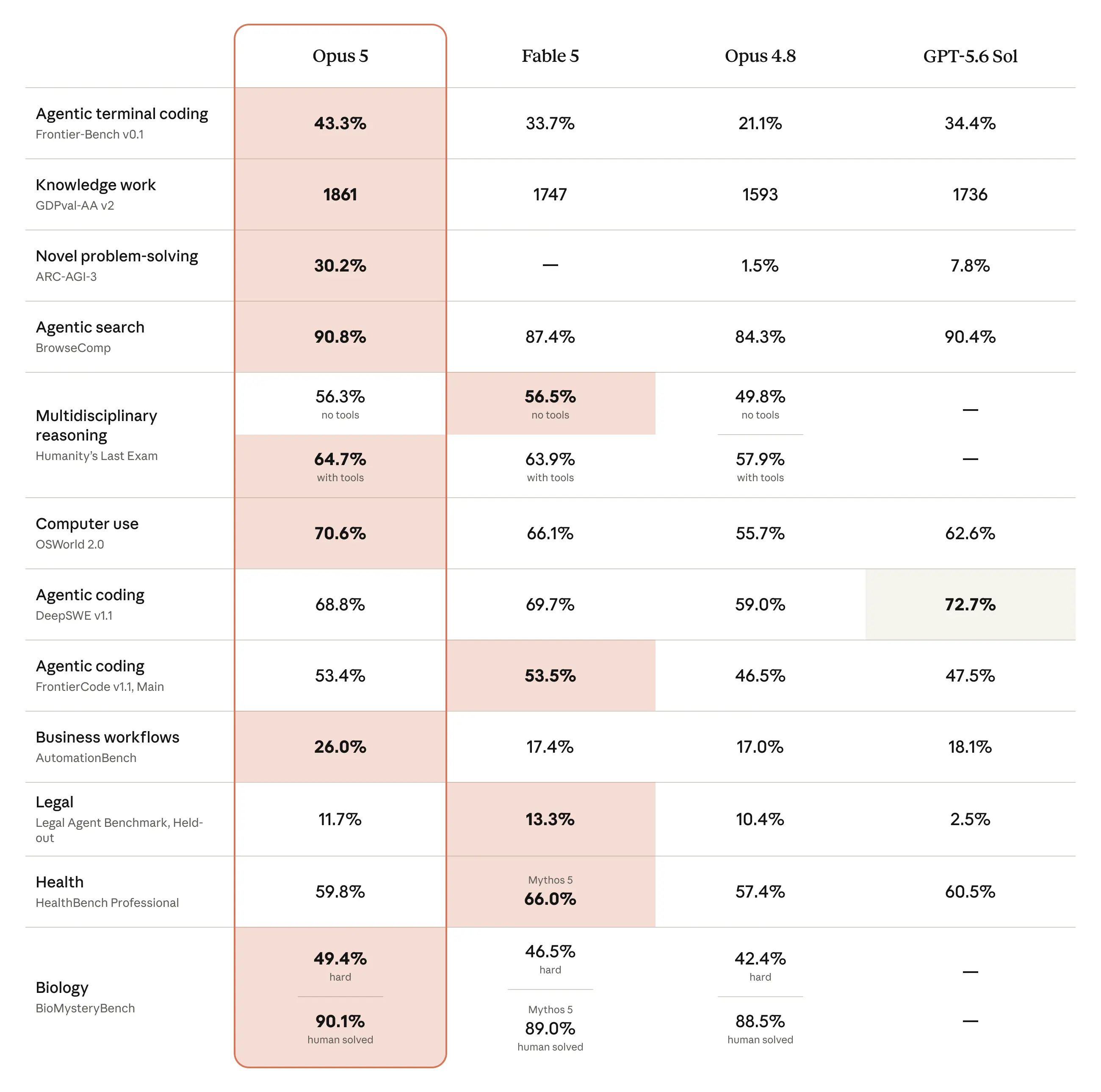
Anthropic launched Fable 5 and Mythos 5 last week. By the weekend, the US government had ordered both suspended for every foreign national on earth.
No advance notice. No specific public explanation. Just a directive citing national security, and Anthropic - with no practical choice - complied. Access to other Claude models remained unaffected. The concern, widely reported, centres on Mythos 5’s ability to detect software vulnerabilities. In the right hands it’s a security tool. In the wrong hands it becomes a cyberweapon. The US government has apparently decided it cannot control whose hands are whose.
This is what AI geopolitics looks like up close.
Update 13 June: Access to Fable 5 blocked for non-US citizens by order of US Government. See Anthropic announcement https://www.anthropic.com/news/fable-mythos-access
Anthropic’s Fable 5 is out, and I’m experiencing a mild anxiety I didn’t expect: I don’t have a killer app idea to throw at it.
It’s a civilian version of their previously announced Project Glass Wing - reserved for select organisations because of its potential for misuse in cyberwarfare and mass-scale hacking. Mythos ships with guardrails that prevent the most dangerous applications. One of those, naturally, is using it to train competing models.
They’ve made it free to subscribers through 22 June and reset quotas to give people more room to play. After that, anyone wanting to use Fable will need to pay for it based on API-like billing. Basically pay as you use, as opposed to drawing on your Anthropic subscription.
At WWDC 2026 this week, someone asked Siri to go through a folder of contractor quotes as PDFs, compare them, pick the best option and draft a reply email. Siri did it. Live, on stage, in front of an audience.
That’s not a kitchen timer. That’s not “Hey Siri, what’s the weather.” That’s the kind of task you’d currently hand to Claude or ChatGPT with careful prompting and a bit of luck. Apple just demonstrated it happening through a voice assistant most of us had written off.
It is worth understanding how they got there - because the architecture behind it is genuinely interesting, and a lot of it comes down to a clever solution to a very unglamorous problem: memory.
Apple didn’t announce anything revolutionary at WWDC. For a company of this maturity, that’s not a criticism - it’s a read of the room.
The focus was platform optimisation and extension: making what already exists faster, smarter and less visually exhausting. Yes, they’ve walked back some of the Liquid Glass overload. Good.
Twelve months ago the most capable model you could rent was Claude Opus 4, at $15 in and $75 out per million tokens. Today the flagship Opus costs a third of that: $5 in, $25 out. So the price of frontier AI collapsed over the year, right?
Not even slightly. It went up. You just have to know where to look, and who is paying.