Posts in: policy

Read the book Meta is trying to bury
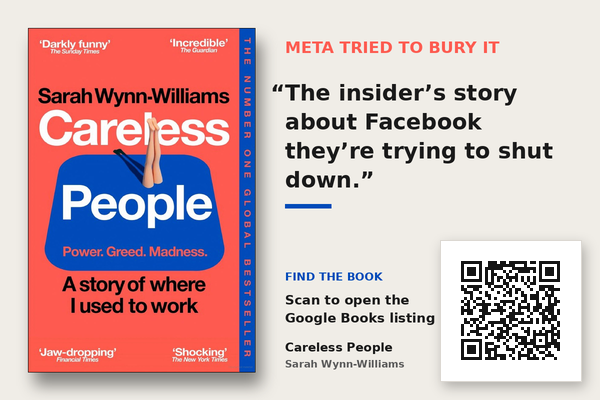
Careless People by Sarah Wynn-Williams beside the line 'The insider's story about Facebook they're trying to shut down', with a QR code to the book listing

Meta has a court order stopping Sarah Wynn-Williams from promoting her own book. She cannot talk about it, cannot criticise the company, cannot even sit near a bookshop that stocks it without risking a fine. So let me do the promoting for her.

The book is Careless People: A Cautionary Tale of Power, Greed, and Lost Idealism. Wynn-Williams spent six years as Facebook’s global director of public policy. Her memoir is a first-hand account of what the company is like from the inside, and it is not flattering: allegations of sexual harassment, of courting Beijing with censorship tools, of contempt for the very users whose teenagers it studied.
Continue reading →


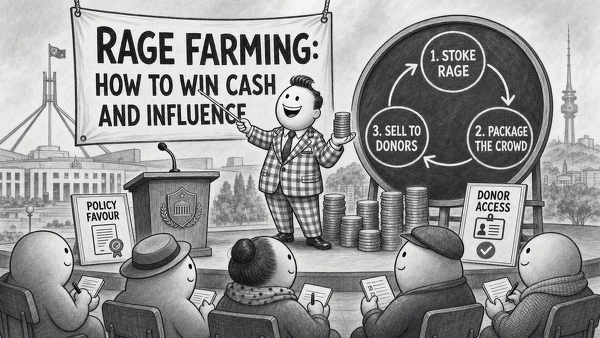
Rage farming

Rage is a product. Pauline Hanson has been selling it for thirty years, but she is no longer the only one running the operation. The buyers have got bigger, the money is flowing from further away, and the press is helping them do it.

Continue reading →


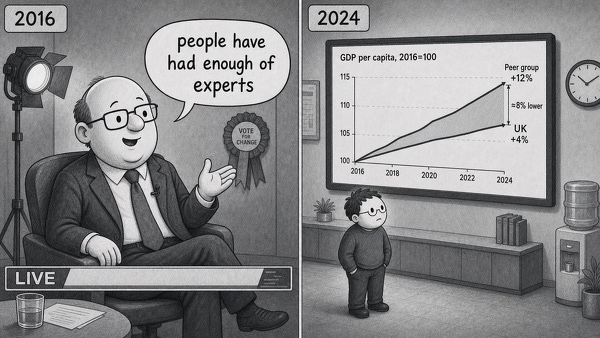
The experts were right, and it cost £200 billion to find out

You have seen the move a thousand times. Someone lays out clear, well-researched evidence and the reply comes back: “that’s just your opinion.” Vaccine safety, climate data, the economics of a trade decision - the subject barely matters. The move puts a measured finding and a gut feeling on the same shelf, equally weighted, free to be picked up or put down depending on which one feels better that morning.

It looks like a debating trick. It is actually a worldview. And Brexit is the cleanest proof we have of what that worldview costs, because unlike most arguments about science and reason, this one came with a bill you can add up.

Continue reading →


The geopolitics of AI

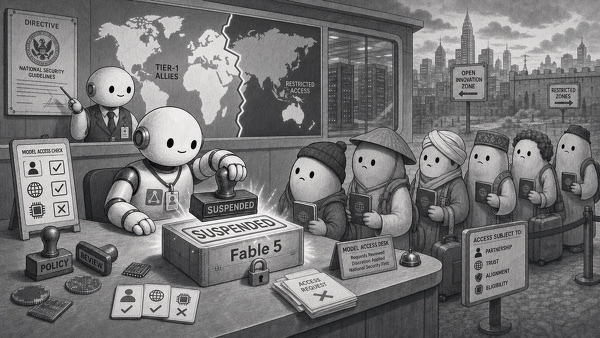
Anthropic launched Fable 5 and Mythos 5 last week. By the weekend, the US government had ordered both suspended for every foreign national on earth.

No advance notice. No specific public explanation. Just a directive citing national security, and Anthropic - with no practical choice - complied. Access to other Claude models remained unaffected. The concern, widely reported, centres on Mythos 5’s ability to detect software vulnerabilities. In the right hands it’s a security tool. In the wrong hands it becomes a cyberweapon. The US government has apparently decided it cannot control whose hands are whose.

This is what AI geopolitics looks like up close.

Continue reading →