Posts in: technology

Australia's Chinese EV soup

Australia has more than 70 car brands fighting over about 1.2 million sales a year. Another one has just been announced. Trying to keep track of the models and manufacturers is becoming like trying to spot the floating ingredients in a Sichuan hotpot.

Continue reading →


Scoring Apple's Knowledge Navigator against Siri and ChatGPT

“If Kathy calls, tell her I’ll be there at two.”

Of everything in Apple’s 1987 Knowledge Navigator video - the tablet, the video calls, the bow-tied agent - that throwaway line is the one nobody has delivered. Siri AI and ChatGPT both understand the sentence perfectly. Neither can do it properly.

This post started with a question. SmartFriend™ Peter Marks asked it back in January on marxy.org: Apple’s Knowledge Navigator - are we there yet? His verdict was close, with long-term memory and autonomous multi-step tasks still missing. “Not quite there, but it is within reach.”

Continue reading →


Sonnet writes better research drafts, Haiku writes them for a cent

TLDR

The test. Haiku 5.5 and Sonnet 5.5 each wrote nine research drafts from identical source packs, using one fixed template. Two AI judges compared them blind, 27 verdicts in all.

The result. Sonnet won 16 verdicts and Haiku 11. Sonnet is better at insight, accuracy and readability. Coverage is tied. Neither model invented a quote.

The twist. It depends on the sources. Sonnet won 15 of 18 verdicts on messy news-style packs by cross-checking and catching errors. Haiku won 8 of 9 on a dense documentation pack, where breadth is the job.

The price. About one US cent a draft for Haiku and nine cents for Sonnet.

My take. Haiku for first-pass drafts on well-organised sources. Sonnet when the sources disagree or might be wrong.

Continue reading →


For coding Haiku 5.5 matches Sonnet at a tenth of the price

Anthropic released Claude Haiku 5.5 overnight, and the pace has not eased. Last year’s small model, Haiku 4.5, cost US$1 in and US$5 out per million tokens. Haiku 5.5 is US$0.10 and US$0.50, a tenth of the price, and Anthropic calls it its cheapest, fastest and most capable small model yet.

That is the pattern across the whole industry this year. Often each release is cheaper and quicker than the last, and every lab is pushing the others. OpenAI’s GPT-6 Luna sits at exactly the same price and appears in Anthropic’s own comparison table. Competition is working, and we are the ones collecting the winnings.

Continue reading →


Jev and the rise of the cheap decision model

A start-up built an AI that cannot write a single sentence, and within weeks OpenAI and Cloudflare had built one too. Here is what Jev does, why it costs a sliver of what ChatGPT-style models charge and who is already using it. All dollar figures are US dollars.

Not three weeks ago, almost nobody outside the developer world had heard of Jev. This week, TechCrunch reported that OpenAI had announced its own version, and the headline called it a Jev clone.

Continue reading →


Skills ain't skills

Google announced Skills for Gemini yesterday. Same word as the Skills in Claude, ChatGPT and Microsoft’s Cowork. Different thing.

In a post on Google’s blog, Gemini product manager Deven Tokuno describes Skills as reusable custom instructions. You save them once and call them by typing a forward slash and the skill’s name. You can build one from an existing chat, stack several together and attach reference files such as PDFs and images. Sharing is promised, with details to come.

Continue reading →


GPT-6 Astra: cheaper coding, pricier thinking

The most interesting thing about GPT-6 Astra isn’t its intelligence score. It’s that it now lies half as often as its predecessor did.

OpenAI launched Astra today, and it’s rolling out to subscribers gradually over the coming week. Which means I can’t test it myself yet, and neither can you. For now the only read available is Artificial Analysis’s independent benchmarking, published alongside the announcement.

Continue reading →


Fable 5.1 - Every says Anthropic is so back (again)

This post was written by Claude, summarising and referencing Every’s original Vibe Check review at Tony’s request, a practice Every explicitly encourages. Tony ran this on Sonnet 5 under his existing plan rather than Fable 5.1, which would have drawn down usage credits. Tony remains sceptical of how he’d personally benefit from Fable 5.1 and is suspicious of the additional costs due to its verbosity.

Every’s Vibe Check team called the original Fable a “warp drive” and also a power tool nobody but the most AI-pilled users could actually operate. Their verdict on Fable 5.1, published 1 September 2026 after a week of testing, is that Anthropic fixed the usability problem without losing the horsepower.

Continue reading →


Found by an algorithm, not a birdwatcher

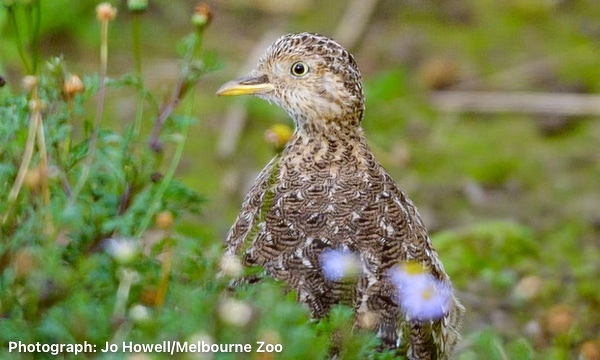
No one had seen a plains-wanderer west of Melbourne in thirty years. Thirty-five microphones did it in one season.

The plains-wanderer is critically endangered, standing about 15cm tall, roughly the size of a pencil, with wide yellow eyes that make it look like a cartoon bird. Fewer than 1,000 remain in the wild. It has no living relatives, genetically alone in its own family, which is part of why birdwatchers travel the world hoping to tick it off. It is also spectacularly good at not being seen: it crouches in grass tussocks and relies on camouflage, a habit that keeps it safe from foxes and safe from human eyes too.

Continue reading →