Posts in: technology

Token inflation: why I'm sticking with Claude 4.6

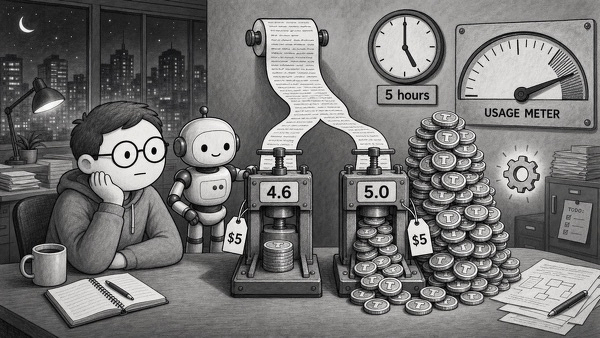
The same code file now costs 30% more to process than it did three months ago. The price per token didn’t change. The tokenizer did.

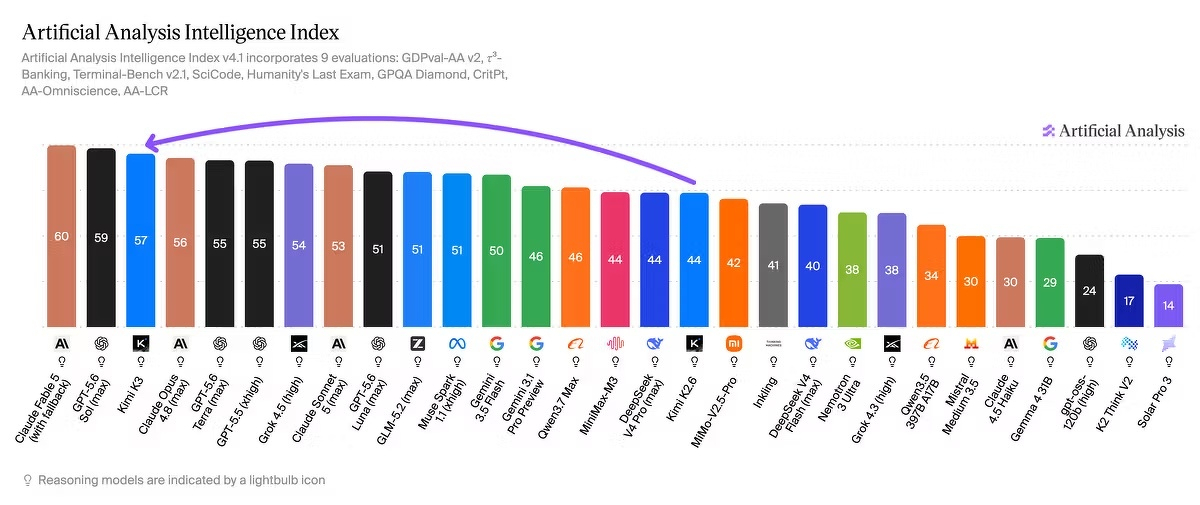
Anthropic’s post-4.6 models - Sonnet 5, Opus 4.8, Fable 5 - use a new tokenizer that cuts text into more pieces than the 4.6 generation did, and you pay per piece. A detailed analysis by Playcode, who measured every frontier tokenizer on identical files, found the new Anthropic tokenizer produces 1.36 to 1.73 times GPT’s token count on the same content. TypeScript is the worst case at 1.73x.

Continue reading →


Eloquent and the end of the dictation subscription

To prepare minutes I recorded a not-for-profit board meeting this week - ninety minutes, soft audio, everything sensitive - and let Google’s new Eloquent convert it locally. Nothing touched a cloud server. Eleven thousand words, on-device, done.

The original Voice Memos recording on my iPhone was quite soft. Board meetings are what they are. But Eloquent handled it better than I expected - the transcript came back clean, the filler words and false starts were stripped out, and I had a working draft of the minutes within a short time. Further refinement with GPT-5.5 and the final document was done. (Yes I am flirting with other models. Anthropic token inflation is becoming an issue - a topic for another day).

Continue reading →


Why Claude still ships as an Electron app

Claude Code can write native Swift good enough to ship a Mac App Store app. Anthropic’s own Claude desktop app is still built using Electron - a web browser (Chromium) wearing a costume.

Electron bundles a full Chromium browser and a Node.js runtime inside every app, so one codebase renders on Windows, macOS and Linux instead of three native builds. It’s why Slack, Discord and (until recently) Notion feel identical everywhere. It’s also why they’re memory-hungry, slow to open and never quite right: patchy keyboard shortcuts, no proper native menu behaviour, battery life your MacBook resents.

Continue reading →


Free text-to-speech on your Mac that's actually good

Text to speech (TTS) is a brilliant service for those who would otherwise be literally speechless. Lost Voice Guy on Britain’s Got Talent rather humorously demonstrated the challenge.

▶ Watch on YouTube

But TTS has broad use. DIY personal podcasts. Read some text when on a walk or in the car. Share a personal update with someone who is more of a listener than a reader.

The good news is you don’t need to pay for a service like ElevenLabs to get quite good TTS. At least not on a Mac. (Don’t ask me about Windows — that’s for someone else to untangle).

Continue reading →


Read the book Meta is trying to bury

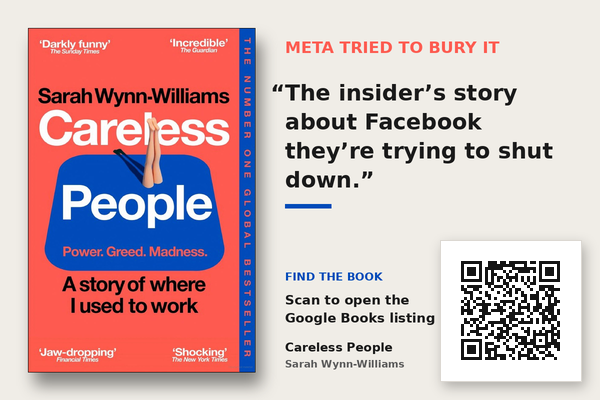
Careless People by Sarah Wynn-Williams beside the line 'The insider's story about Facebook they're trying to shut down', with a QR code to the book listing

Meta has a court order stopping Sarah Wynn-Williams from promoting her own book. She cannot talk about it, cannot criticise the company, cannot even sit near a bookshop that stocks it without risking a fine. So let me do the promoting for her.

The book is Careless People: A Cautionary Tale of Power, Greed, and Lost Idealism. Wynn-Williams spent six years as Facebook’s global director of public policy. Her memoir is a first-hand account of what the company is like from the inside, and it is not flattering: allegations of sexual harassment, of courting Beijing with censorship tools, of contempt for the very users whose teenagers it studied.

Continue reading →


Worth reading — Alan Turing's secret Delilah project

Alan Turing taught himself electronics from an RCA vacuum tube manual on a ship crossing the Atlantic in 1943. Within months he was in a Nissen hut in the English countryside, building a working voice encryption device that shrank a 50,000 kilogram Bell Labs room-filling machine down to three shoebox-sized units. Donald Bayley was a young electrical engineering graduate who arrived at Hanslope Park in 1944. He found Turing’s soldered circuits looking like a “spider’s nest” and promptly dragged him through breadboarding boot camp.

Continue reading →


The AI layoff wave is becoming a cover story

Tech companies are posting record profits while laying off tens of thousands of people and citing AI as the explanation. So far in 2026: 363 layoffs, nearly 150,000 people, 974 per day - 44% faster than last year, per TrueUp. May was the highest single month in two years. AI was the most cited layoff reason across every industry for the third month running.

Continue reading →


Apple didn't get gobbled by Google

Many are saying it. Google Gemini is inside Apple’s iPhone AI. Apple has been gobbled by Google. The companies' phones are barely distinguishable now. None of that is right. The confusion is understandable. Google uses the word “Gemini” to mean at least two different things: their consumer AI assistant app and their family of underlying AI models. When people hear that “Gemini is powering Siri AI,” they picture the Google Gemini app somehow inside an iPhone.

Continue reading →


The geopolitics of AI

Anthropic launched Fable 5 and Mythos 5 last week. By the weekend, the US government had ordered both suspended for every foreign national on earth.

No advance notice. No specific public explanation. Just a directive citing national security, and Anthropic - with no practical choice - complied. Access to other Claude models remained unaffected. The concern, widely reported, centres on Mythos 5’s ability to detect software vulnerabilities. In the right hands it’s a security tool. In the wrong hands it becomes a cyberweapon. The US government has apparently decided it cannot control whose hands are whose.

This is what AI geopolitics looks like up close.

Continue reading →