Posts in: productivity

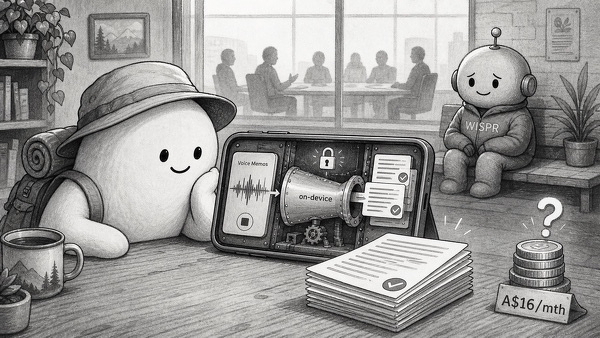
Free text-to-speech on your Mac that's actually good

Text to speech (TTS) is a brilliant service for those who would otherwise be literally speechless. Lost Voice Guy on Britain’s Got Talent rather humorously demonstrated the challenge.

▶ Watch on YouTube

But TTS has broad use. DIY personal podcasts. Read some text when on a walk or in the car. Share a personal update with someone who is more of a listener than a reader.

The good news is you don’t need to pay for a service like ElevenLabs to get quite good TTS. At least not on a Mac. (Don’t ask me about Windows — that’s for someone else to untangle).

Continue reading →


Cowork read its own logs and wrote me five new skills

I read Austin Henley’s post Automating my job away on a Friday night and did the laziest possible thing with it.

Henley’s whole piece builds to one prompt. A friend who runs a startup tells his team don’t do anything three times - if a task comes round more than twice, automate it. Henley took that to its logical end and pointed his coding agent at its own history.

So I copied his idea, swapped “Copilot” for “Cowork”, and pasted this in:

Continue reading →


Every USB-C port looks the same too. Some are quietly slower

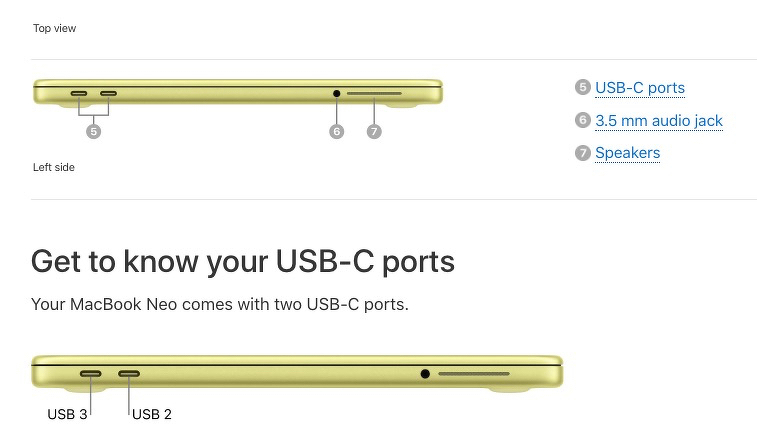
MacBook Neo port layout: the left USB-C port runs USB 3 and drives a display, the right port runs only USB 2

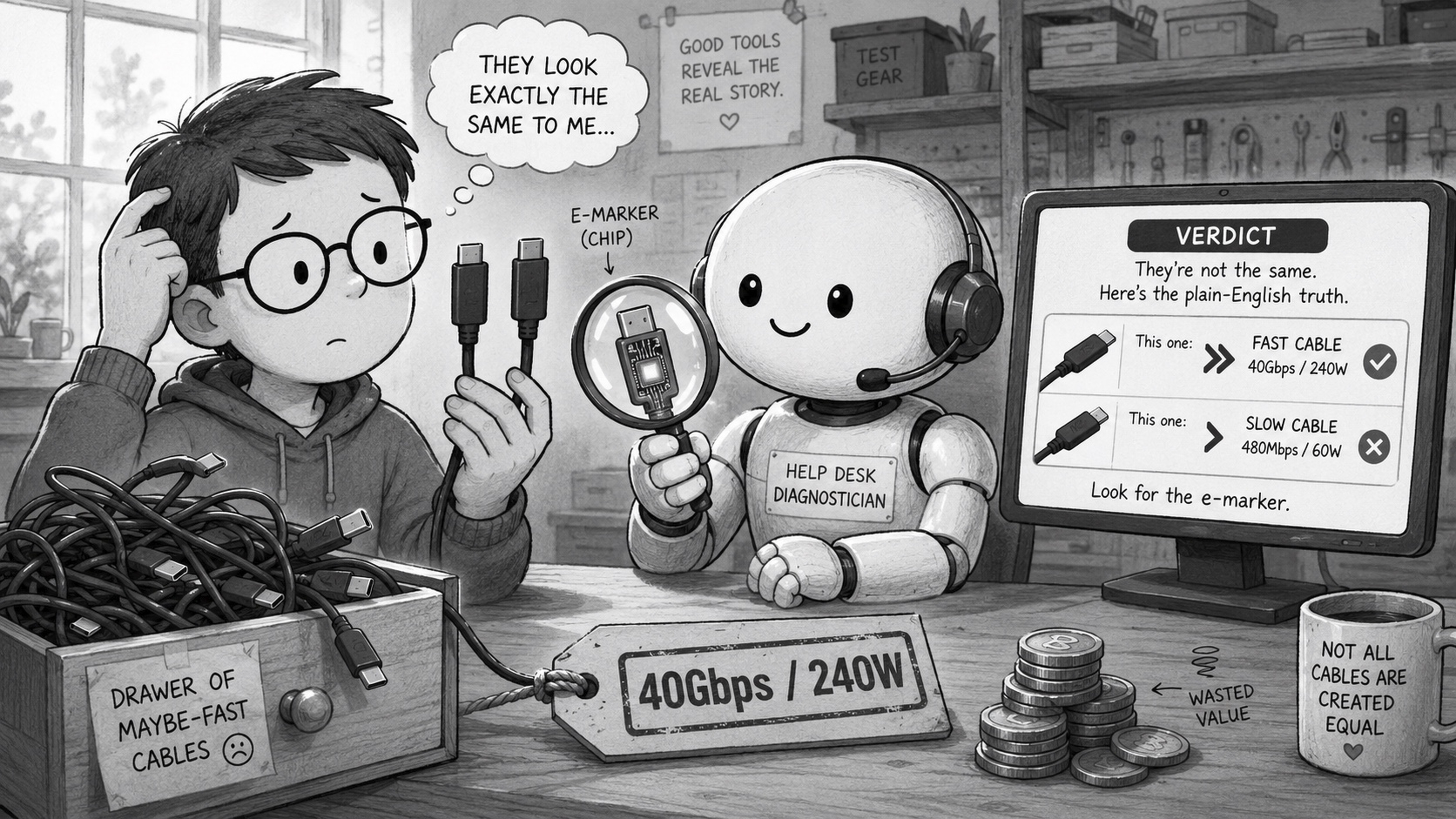
Last time it was the cables lying to you. You binned the mystery leads, bought the certified ones with the speed and watts printed on the side, labelled the survivors. Good. You fixed the drawer.

Now look at the laptop itself, because it is about to play the same trick on you. Two ports, same oval socket, same confident silver moulding. One is fast. One is not. And nothing on the outside tells you which is which.

Continue reading →


Plain English is the new formula

Auto-generated description: A robot is efficiently managing stock data with an overwhelmed human in the background surrounded by paperwork.

The work I’ve been doing between Claude Cowork and Excel lately has been considerably more involved than what follows. But this example makes the pattern clear - and it captures exactly why the combination saves so much time and frustration.

I had a list of 20 ASX stocks in an Excel file. Two columns: ticker code and company name. I wanted two more: market cap and 12-month return, pulled from most recent data.

Continue reading →


The pathfinder finds the cliffs

Another week, another claimed breakthrough - this one called OpenHuman.

It lives in an avatar, has a voice and can join your Google Meet as an equal - “joins meetings, transcribes them into your Memory Tree, and can speak back into the call.” The pitch is that it is “an open-source AI assistant designed to be the memory and doer for everything you do across your tools.”

It ticks a lot of boxes. It promises all the right things. It is very tempting.

Continue reading →


Shopify's River — the agent you can only use in public

Tobi Lutke shares how Shopify built an AI agent called River that helps employees work and learn together — publicly, on Slack. The detail that matters: River isn’t private. Employees can only use it in the open, which means every query, every answer, every correction plays out where colleagues can watch. What looks like a productivity tool is actually a cultural one. The agent becomes a teaching workshop — ambient, always on, free to observe.

Continue reading →


The wiring that happens in the middle

A confirmation email landed in my inbox this week. VIC N Drive Meet. A curated backroads blast with a bunch of fellow Nthusiasts, organised by Hyundai N Australia.

I’m a lifelong revhead. The smell of a good back road on a cool morning, a car that actually wants to be driven hard, and people who feel the same way about it - that’s a perfect Saturday. The i30 N is the best bang-for-buck hot hatch on the market, and I’ll die on that hill.

I’m registered, I’m keen, and I already had the booking email and a calendar entry sorted.

Then I asked Claude Cowork a simple question: “I have these details in my calendar and Gmail - should I capture this information elsewhere? Why? How?"

Continue reading →


Your AI is working. Your brain is paying for it.

“I end each day exhausted — not from the work itself, but from the managing of the work. Six worktrees open, four half-written features, two ‘quick fixes’ that spawned rabbit holes, and a growing sense that I’m losing the plot entirely.” — Francesco Bonacci, founder of Cua AI

The pitch for AI in the workplace has always been about output: write faster, analyse more, respond at scale. And the tools deliver on that. They deliver relentlessly. The problem is that more output doesn’t automatically mean more throughput. Sometimes it means more to review, more to cross-check, more decisions to make before anything ships.

Continue reading →